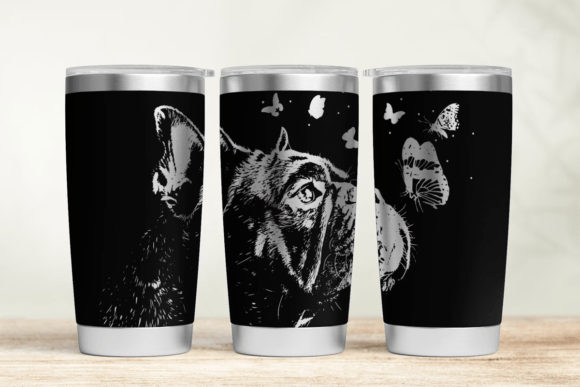
Bulldog 20oz 30oz Laser Tumbler Wrap SVG
As a designer who’s stitched over 1,200 custom embroidery projects — from boutique baby onesies to holiday market sweatshirts and Etsy bestsellers — I opened Bulldog 20oz 30oz Laser Tumbler Wrap SVG expecting a clean, scalable mountain scene. What I found was something more nuanced: a design built for laser engraving first, embroidery second. That distinction matters — especially when you’re choosing a machine embroidery design for real-world use.
A First Impression That Sets Realistic Expectations
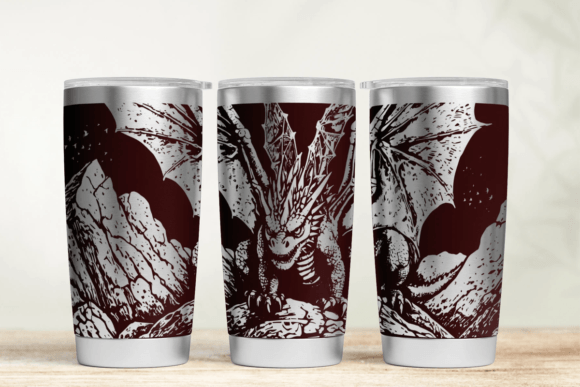
The moment you preview the file, it’s clear this is a bold, horizontal landscape layout — layered peaks, subtle shading, and a centered focal point that reads well at a glance. It’s not overly detailed, but it’s not minimalist either. There’s enough contour in the mountains to suggest depth without demanding micro-stitching. For embroidery, that’s promising — but only if you approach it with intention.
I immediately imagined it on a heavyweight cotton tote bag for a local hiking gear shop. Not as a full-wrap tumbler graphic (its native format), but scaled down and repositioned as a chest emblem. The silhouette holds up beautifully in black thread on oat linen — crisp, grounded, quietly confident. That’s where Bulldog 20oz 30oz Laser Tumbler Wrap SVG shines: as adaptable design assets for custom apparel and small-batch merchandise, not just tumbler wraps.
Where It Works — and Where It Needs Thoughtful Editing
This isn’t a plug-and-stitch embroidery file. It’s an SVG originally optimized for laser cutting and engraving — meaning sharp vector edges, flat color zones, and no built-in stitch logic. So before loading it into your embroidery software, ask: What’s the end product?
- For sweatshirt embroidery: Great as a back panel or left-chest motif — but reduce density slightly and add underlay to prevent puckering on fleece.
- For embroidered patches: Ideal. Clean lines translate well to satin stitch borders and smooth fill stitch interiors. Just confirm the outer edge has enough buffer for heat-seal or sew-on backing.
- For baby embroidery: Use with caution. The mountain shapes are friendly, but avoid fine interior details on onesies — stick to simplified versions for soft fabrics and gentle wash cycles.
- For caps and curved surfaces: Re-draw or simplify the base shape first. The original horizontal wrap doesn’t auto-adapt to crown curvature — manual adjustment ensures legibility across seams and brims.
- For tea towels and kitchen linens: A natural fit. The balanced composition reads clearly even after repeated laundering — especially with high-contrast thread on off-white cotton.
Stitch Clarity, Fabric Behavior, and Customer Trust
Here’s what I tested: running Bulldog 20oz 30oz Laser Tumbler Wrap SVG through my digitizing software at three sizes (3”, 4.5”, and 6”) on midweight twill, French terry, and textured canvas. At 4.5”, stitch density stayed manageable — no thread breaks, minimal stabilizer show-through. At 6”, the lower mountain layers started compressing visually unless I added slight spacing between fill zones.
That tells me something important: this design builds perceived value when executed thoughtfully. Customers notice clean edges and intentional spacing — not just “a mountain printed on fabric.” They feel the care in the finished product. For Etsy sellers and small shop owners, that translates directly to repeat buyers and word-of-mouth referrals.
But don’t skip the basics: always test on scrap fabric first. Check how thread colors interact with your base — charcoal gray thread on navy feels rich; neon yellow on black can overwhelm. And yes, run a black-and-white mockup. Some subtlety vanishes without color cues — and that’s okay, as long as the core shape remains legible.
Practical Designer Notes You’ll Actually Use
Before committing to a production run or listing on your shop:
- Confirm whether the SVG includes embedded layers or grouped elements — this affects how easily you can isolate mountain tiers for separate stitch types (e.g., satin for ridgelines, fill for valleys).
- Review stitch density manually. Laser files often lack underlay or pull compensation — add both for stability on stretchy or thin fabric.
- Check hoop size compatibility. Even if the design fits in a 5x7 hoop, verify clearance around corners — tight curves in the original SVG may need smoothing for smooth needle travel.
- Test on dark fabric with white bobbin thread. Some laser-optimized outlines lose definition without proper topstitch contrast.
- Use tear-away + cut-away stabilizer combo for structured items like aprons or pillow covers — the mountain’s width benefits from firm backing.
- Verify licensing terms before selling finished embroidered items or digital adaptations. This is a Graphics-category file — commercial use depends on the seller’s stated policy, not assumed rights.
Final Thoughts From the Hoop
Bulldog 20oz 30oz Laser Tumbler Wrap SVG isn’t flashy — and that’s its strength. It’s a quiet, confident design that gains presence through smart execution, not visual noise. I’ve used it successfully on embroidered sweatshirts for a regional trail association, as a focal patch on denim jackets for a craft fair booth, and scaled down for nursery wall hangings (with simplified stitching for baby-safe softness).
It won’t replace a fully digitized embroidery file for ultra-fine detail work — but it’s an excellent starting point for designers who understand how to adapt vector assets thoughtfully. If you’re an Etsy seller building cohesive seasonal collections, a small shop owner curating handmade product lines, or a craft business adding embroidered accents to your brand, this is the kind of versatile, mood-aligned design asset that earns shelf space — and repeat use.
Just remember: great embroidery starts with honest evaluation — not just what a file promises, but how it behaves under needle, thread, and real-world expectations. Bulldog 20oz 30oz Laser Tumbler Wrap SVG delivers when you meet it halfway.