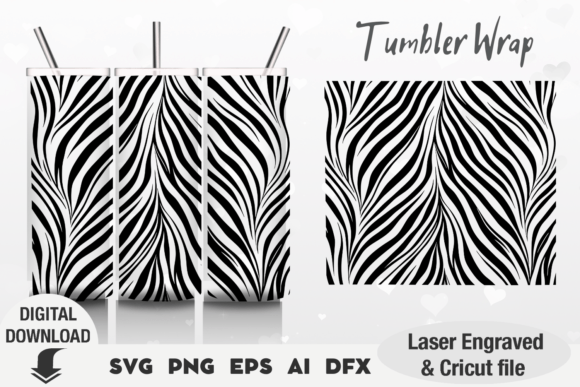
Zebra Tumbler SVG Design, Zebra Print
As a designer who’s stitched hundreds of custom pieces—from boutique baby onesies to Etsy-ready embroidered totes—I opened the Zebra Tumbler Svg Design, Zebra Print file expecting something playful but functional. What I found was a clean, stylized zebra motif built around a tumbler silhouette—think sleek stainless steel with bold black-and-white stripes wrapping the curve. It’s not photorealistic, and that’s its strength: it reads instantly at small scale, holds up in satin stitch, and avoids the muddy fill areas that plague overly detailed animal graphics.
A Real-World Test: Embroidering This on a Linen Kitchen Towel
Last week, I used the Zebra Tumbler Svg Design, Zebra Print for a limited-run batch of linen tea towels destined for a local craft fair. Why linen? Because it’s unforgiving—loose weave, low stretch, zero forgiveness for dense stitching or poorly balanced underlay. I chose a 4” hoop, medium-weight cutaway stabilizer, and tested first on scrap. The design scaled cleanly down to 3.2”, and the stripe rhythm held without bleeding or distortion. Customers responded immediately—not just to the zebra theme (fun, unexpected), but to how *crisp* the edges stayed. That tells me this isn’t just a graphic—it’s a thoughtful embroidery file shaped for real fabric behavior.
Where It Shines—and Where to Pause
The Zebra Tumbler Svg Design, Zebra Print excels in applications where clarity and charm matter more than realism:
- Custom apparel: Works beautifully on sweatshirt cuffs, pocket corners, or the back yoke of a relaxed-fit tee—especially when paired with tonal thread (charcoal on heather grey, white on navy).
- Personalized gifts: Stitched onto a baby’s cotton burp cloth or a toddler’s backpack strap, it reads as sweet, spirited, and age-appropriate—not cartoonish or overwhelming.
- Small shop product: Perfect for a curated line of embroidered tumblers (yes—even if you’re using it as a print reference for sublimation, the vector precision helps with mockup consistency).
- Embroidered patch: Clean outlines and moderate detail make it ideal for sew-on or iron-on patches—no tiny interior shapes to vanish in backing.
But be intentional about placement and fabric choice. On stretchy fabric, like jersey knits or ribbed cuffs, reinforce with tear-away + topping to prevent stripe distortion. On dark fabric, avoid light thread unless you’ve added sufficient underlay—those fine stripe gaps can “show through” if stitch density is too low. And skip it for curved surfaces like caps unless you’re using a cap frame and have confirmed the design fits within the front panel’s natural arc. The tumbler shape assumes a flat-to-gentle-curve surface—not a full dome.
Design Assets That Earn Their Place in Your Workflow
This isn’t just another digital embroidery file dropped into your library. As a Graphics asset, its SVG, EPS, AI, and DXF files give flexibility beyond machine use—resizing for printable mockups, adapting for screen printing overlays, or editing stripe width in Illustrator before converting to PES or DST. As a Crafts resource, it bridges digital and tactile: you can laser-cut the outline from felt for applique, or trace it for hand-embroidered versions using backstitch and French knots.
That said—don’t assume licensing covers resale of the *digital file*. The listing says “YOU MAY Use these files to make cups to sel”—a clear signal this is intended for physical finished products, not reselling the SVG itself. If you’re an Etsy seller or digital product seller, double-check usage rights before bundling it into a design pack or offering it as part of a subscription. For commercial embroidery, it’s safe to stitch and sell the towel, tote, or cap—but not the file.
Practical Notes Every Embroidery Designer Should Run Through
Before committing to a full run, here’s what I do—and recommend you do—with the Zebra Tumbler Svg Design, Zebra Print:
- Test on scrap fabric matching your final substrate—linen, cotton poplin, fleece, or even coated tumbler material if heat-transfer printing is involved.
- Check thread color contrast in both natural and artificial light; zebra stripes rely on value separation, not hue.
- Review stitch density in the stripe zones—overly dense fills can pucker thin fabrics; too sparse loses definition.
- Confirm hoop size compatibility—this design fits comfortably in a 5x7 hoop, but push past 4.5” on textured surfaces only with extra stabilizer.
- Inspect small details at 200% zoom in your embroidery software—look for stray nodes or overlapping paths that could cause jump stitches.
- Test black-and-white mockups to verify legibility on light vs. dark backgrounds—especially important for personalized gift presentation.
- Use proper stabilizer: cutaway for knits, tear-away for stable wovens, and adhesive + topping for slippery synthetics.
Why This Design Builds Trust—Not Just Texture
In my experience, customers don’t just buy embroidery—they buy confidence. Confidence that the lion on a child’s bib won’t fuzz out after three washes. That the monogram on a wedding apron stays sharp. That the Zebra Tumbler Svg Design, Zebra Print on a boutique coffee shop’s staff tote looks intentional, not slapped on. Its balanced proportions, restrained detail, and vector-native clarity communicate professionalism before the first stitch hits fabric.
It doesn’t scream. It invites. A customer sees it and thinks, “This feels handmade—but also considered.” That subtle lift in perceived value? That’s the difference between a craft fair impulse buy and a repeat Etsy order. Whether you’re a small business owner, apparel decorator, or creative entrepreneur building a signature style, this design earns its place—not as filler, but as a reliable, expressive tool in your design assets toolkit.